Rice and pasta, known as sopas, are standard side dishes here in Mexico, and they are usually kept pretty simple - margarine, onion, or pureed tomatoes, usually. In all the meals that I have eaten and then all that I have made, there is a clear pattern in which rice goes with which meal. Simple white onion rice goes with chile seco, ribs or salsa verde; arroz amarillo (rice cooked in tomato puree) is absolutely necessary for chiles rellenos and pretty common for mole.
This rice recipe is a much more substantial rice, a traditional Mexican vegetable rice. It's also the kind of rice that you find on the side of your enchiladas at On The Border and other Mexican chain restaurants.
While this recipe is traditional, in my experience, it's not an everyday recipe. Too many ingredients, too expensive, too time-consuming, but this rice is a great thing to make when you have a lot of leftover vegetables. It's satisfying as a side dish, but after all that chopping work that you've done, go the extra step, throw in some shrimp or shredded chicken and make it a meal. (Or throw in both and some chorizo, and have yourself a nice little fake-out paella-esque dish).
Ingredients
3 Tbsp. vegetable oil
1 jalapeño, finely chopped
1 red onion, finely chopped
4 roma tomatoes, finely chopped
2 cups rice
1 cup frozen peas
1 tsp. oregano
1 tsp. cumin
1 tsp. black pepper
1 tsp. salt (more or less, but be careful; some stock can be really salty)
3 1/2 cups chicken stock (or water and a stock cube)
Directions
1 - Heat the oil in a deep pot with a lid.
2 - Add the onion, and cook for about 10 minutes or until translucent. Add the jalapeño and the tomato and cook another 5 minutes, until softened.
3 - Add the rice, and toast for about 5 minutes.
4 - Add the oregano, cumin, black pepper and salt. Stir well.
5 - Add the chicken stock, stir well, and bring to a boil over low heat.
6 - Put the lid on, turn to low heat, and cook the rice for 25 minutes.
7 - Add the peas, and put the lid back on for about 5 more minutes (or until peas are defrosted and heated through).
8 - Fluff with a fork and serve.
From Queens to Mexico City, and pretty much nothing in between.
Thursday, March 29, 2012
Monday, March 26, 2012
Mexican Cheesecake
Now, there are three Mexican-specific elements to making a New York style cheesecake here in Mexico City. First, lemons are fairly pricey and annoyingly difficult to find, so we use limes.
Third, squeezee bottle dulce de leche is pretty much a standard staple here, so we went ahead and swirled some of that in, too.
So, it's not Mexican, but my husband is...and it looks so pretty!
Wednesday, March 21, 2012
Proper Piñata Protocol
1 - I have never seen the rainbow donkey (in piñata form...or in real life, for that matter) that seem to be the traditional American piñata. It may be popular up north, but here in South Central, it is all about the traditional form of the five pointed star. Dora, Santa, and other human shapes are also common enough (but there's something weird about beating those ones).
4 - The number one rule of the piñata is that the youngest/smallest kids go first, the biggest/oldest ones last; that way, everyone gets at least one at bat.
Dale Dale Dale, Hit it, Hit it, Hit it,
No pierdas el tino, Don't lose your aim,
Porque si lo pierdes, Because if you lose it,
Dale Dale Dale, Hit it, Hit it, Hit it,
Dale, No le dio, Hit it, No you didn't,
Quitenle la venda, Take off the blindfold,
Porque sigo yo. Because it's my turn.
Ya le diste una, Now you hit it once
Ya le diste tres, Now you hit it three times
Y tu tiempo se acabo! And your time is done!
OK, so the song really does not translate well into English, but the idea is that when the song ends, so does your turn.
(Note: I know most of these pictures are inside, but that's because it rained all Christmas week in Veracruz this year. Generally, you want to do this whole piñata thing outdoors.)
Wednesday, February 29, 2012
Café de Olla
Despite the sweltering heat, coffee is very popular in Veracruz, and while there are a few cafés, you certainly won't find coffee makers in most homes. In any market, tianguis or baratero, you can get fresh ground local coffee, which is then boiled in an earthenware pot (an olla) with piloncillo and cinnamon to become Mexico's unique brand of coffee, café de olla.
In my experience, the beverage is just skimmed from the top of the pot (or made from Nescafé - also very popular in Mexico), but just to be sure that you don't get a mouthful of some very bitter coffee grounds, strain, STRAIN, STRAIN!
Ingredients
1 liter water
1 cinnamon stick
100g piloncillo (or brown sugar, but it's not the same)
50 g ground coffee (or Nescafé it)
Directions
1 - Put the water, coffee, cinnamon stick and piloncillo into a pot.
2 - Bring to a simmer, and stir to dissolve the piloncillo.
3 - Allow the coffee to steep for about 5 to 10 minutes.
4 - Take out the cinnamon stick, and strain the coffee through a fine mesh strainer (twice).
5 - I probably don't need to mention it, but serve hot.
In my experience, the beverage is just skimmed from the top of the pot (or made from Nescafé - also very popular in Mexico), but just to be sure that you don't get a mouthful of some very bitter coffee grounds, strain, STRAIN, STRAIN!
Ingredients
1 liter water
1 cinnamon stick
100g piloncillo (or brown sugar, but it's not the same)
50 g ground coffee (or Nescafé it)
Directions
1 - Put the water, coffee, cinnamon stick and piloncillo into a pot.
2 - Bring to a simmer, and stir to dissolve the piloncillo.
3 - Allow the coffee to steep for about 5 to 10 minutes.
4 - Take out the cinnamon stick, and strain the coffee through a fine mesh strainer (twice).
5 - I probably don't need to mention it, but serve hot.
Wednesday, February 22, 2012
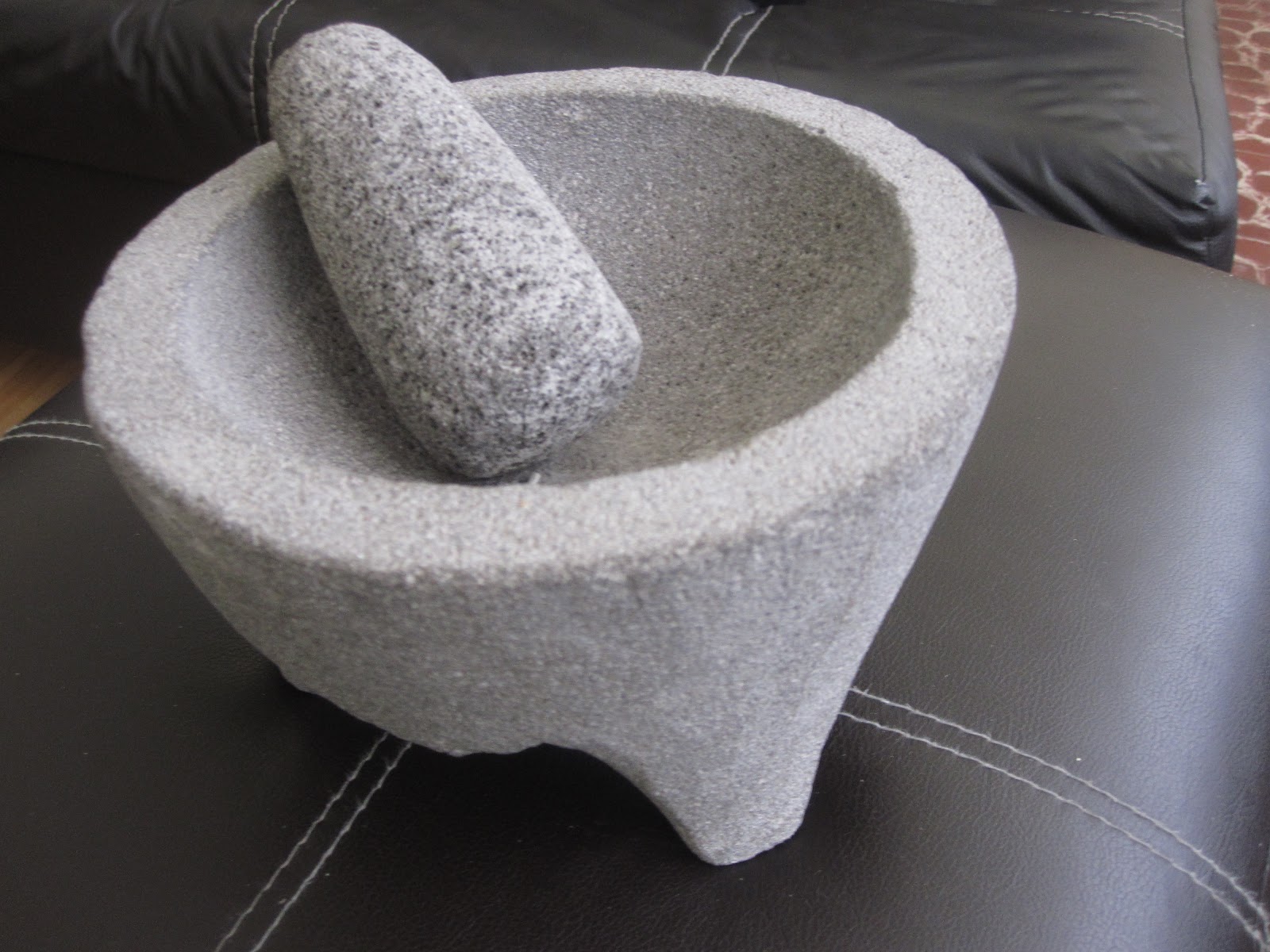
Molcajete
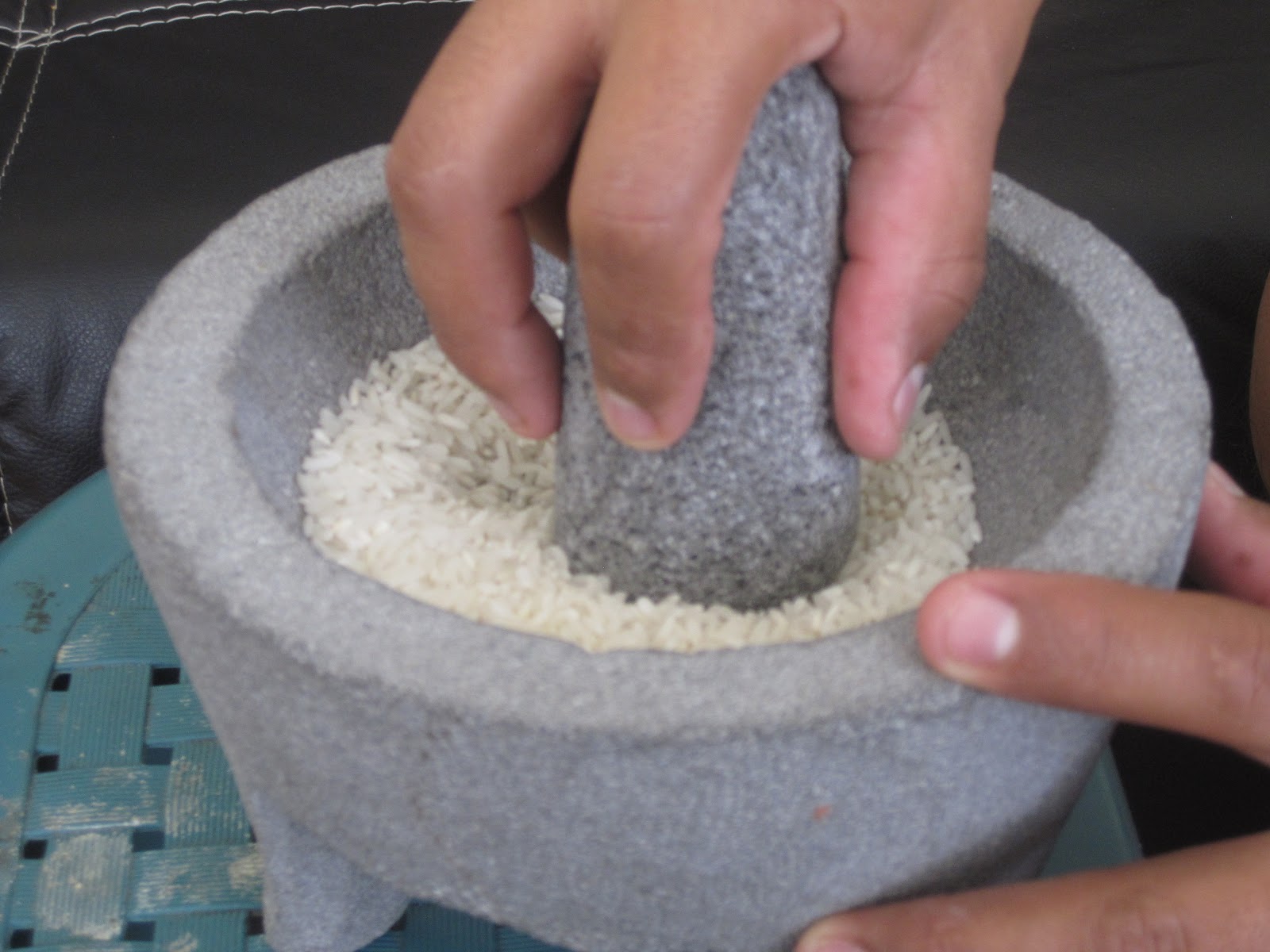
If you are lucky enough to receive such a gift, make sure that you listen to the guy at the market (or this post) and season it before use. To season the lava rock, put 2 tablespoons of dry, raw rice into the molcajete and grind it nice and good (about 10 minutes), wash it, let it dry, and repeat. This makes the porous rock scratchy and irregular, which helps to crush and smash the bigger type ingredients usually put in here.
And now you can make some really rustic salsa in your molcajete (which everyone down here agrees tastes better than salsa in a blender - it's the taste of effort, I guess).
Thursday, February 2, 2012
Día de la Candelaria
Whatever type of tamale is served (they're all good), atole is served as the accompanying beverage for this authentic Mexican Día de la Candelaria.
Thursday, January 26, 2012
Subscribe to:
Posts (Atom)